Review: 3D Mandala 1 Vector Eps 10 for Real Embroidery
As a designer who spends more time staring at stitch maps than most people care to admit, I approach every new digital embroidery file with a mix of excitement and skepticism. We have all been there: you buy a beautiful graphic online, only to find out it turns into a bird's nest of thread once it hits the machine. Today, I am taking a close look at 3D Mandala 1 Vector Eps 10. While this asset is categorized under Shapes and marketed as a 3D SVG, my job is to translate those vector lines into a tangible finished product that holds up under the needle.
First Impressions and Visual Personality
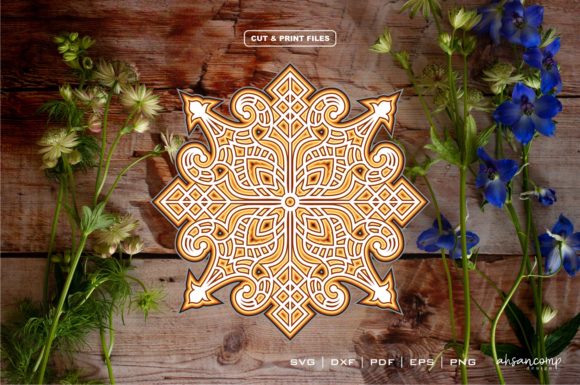
When I first opened the ZIP file containing 3D Mandala 1 Vector Eps 10, the immediate takeaway was its structural integrity. Mandalas are notoriously difficult to digitize because they rely on perfect symmetry and intricate layering. This design captures a mood of balanced complexity. It feels meditative yet bold, making it a versatile candidate for various embroidery projects. The "3D" aspect in the title suggests depth, which in the world of vectors usually means layered elements ready to be separated for different stitch types or colors.
The layout is circular and dense, which immediately tells me this is not a design for a tiny 4x4 hoop unless you are willing to sacrifice significant detail. The visual personality leans towards the bohemian and spiritual, fitting perfectly with current trends in boutique branding and handmade home decor. However, seeing it on a screen is one thing; imagining it as a machine embroidery design requires a different kind of vision.
Real-World Application: The Tote Bag Test
To truly evaluate 3D Mandala 1 Vector Eps 10, I imagined a specific real-life scenario: a custom order for a local yoga studio needing branded tote bag designs. The client wants something that looks premium but can withstand the rigors of carrying mats and water bottles. In this context, the mandala shape works exceptionally well. Its circular nature draws the eye to the center of the bag, creating a focal point that feels intentional rather than random.
If I were stitching this onto a canvas tote, I would likely treat it as a combination of fill stitch for the larger petals and satin stitch for the defining outer rings. The density of the design adds weight to the fabric, which is great for heavy cotton but requires careful handling. For an Etsy seller looking to expand their small shop product line, this design offers high perceived value. Customers often associate complex geometric patterns with higher quality, assuming the stitching is clean.
Beyond bags, I can see this working beautifully on sweatshirt embroidery. Placed on the back of a oversized hoodie, the scale of the mandala would shine. The 3D SVG format allows me to manipulate the layers in my editing software, perhaps separating the background elements to use a lighter thread color and the foreground details in a contrasting shade. This layering technique mimics the depth promised in the product title without requiring actual 3D puff foam, keeping the stitch density manageable.
Navigating Fabric Textures and Hoop Limitations
While the potential is high, there are areas where 3D Mandala 1 Vector Eps 10 demands caution. The intricacy of mandala designs means there are many small corners and tight curves. If you attempt to stitch this on a textured fabric like a waffle knit or a loose-weave linen, you risk losing those fine details. The needle might punch through existing holes or skip over the weave, ruining the crispness of the running stitch outlines.
Furthermore, the size of the design is a critical factor. Since the product description notes that files come in a ZIP format but does not specify exact dimensions or hoop compatibility, you must verify the sizing before purchasing. If your machine only supports a 5x7 hoop, ensure the design fits with enough margin for the frame clamps. Trying to force a large, detailed mandala into a small hoop is a recipe for distortion.
Stretchy fabrics present another challenge. For baby embroidery items like onesies, the fabric moves significantly during stitching. A dense mandala can cause the fabric to pucker or gather if the stabilizer is not robust enough. I would strongly recommend using a cut-away stabilizer for this design rather than tear-away, especially if the finished product is intended for frequent washing. The weight of the threads needs permanent support to maintain the shape of the circle over time.
Enhancing Brand Value and Customer Trust
For creative entrepreneurs and commercial embroidery professionals, the choice of design directly impacts brand consistency. Using a high-quality asset like 3D Mandala 1 Vector Eps 10 signals attention to detail. When a customer receives a pillow cover or an apron with a cleanly stitched, symmetrical mandala, it builds trust. They perceive the maker as skilled and the product as valuable.
Conversely, a poorly executed mandala with gaps in the fill or misaligned layers can look messy very quickly. Because this design relies on radial symmetry, any error in hooping or fabric tension will be immediately obvious to the naked eye. There is no hiding a wobbly circle. Therefore, this design is best suited for makers who are confident in their machine setup and hooping techniques. It rewards precision.
In terms of marketing, this design serves as an excellent printable mockup element. Even before stitching, the vector clarity allows for stunning digital previews for your online store. Whether you are selling custom apparel or holiday embroidery gifts, the visual appeal of the mandala translates well to photography, helping to drive buyer engagement.
Practical Notes for the Studio
Before you commit to stitching 3D Mandala 1 Vector Eps 10 on a client's garment, here are a few practical steps I recommend based on my experience:
- Test on Scrap First: Always stitch a sample on the exact same fabric and stabilizer combination you plan to use for the final item. This reveals how the fabric texture interacts with the thread.
- Check Color Contrast: Mandalas can look flat if the thread colors are too similar. Use the vector layers to plan a gradient or high-contrast palette that highlights the depth.
- Review Stitch Density: If the design feels too heavy, consider reducing the fill density in your editing software to prevent stiffness, especially on wearables.
- Inspect Small Details: Zoom in on the innermost circles. Ensure the paths are closed and ready for stitching to avoid thread breaks.
- Verify Licensing: The description mentions the files are for illustration purposes regarding mockups, but always confirm the license terms for commercial embroidery sales. Ensure you are allowed to sell physical items made with this design asset.
Ultimately, 3D Mandala 1 Vector Eps 10 is a promising tool for the right project. It bridges the gap between digital art and tactile craft, offering a sophisticated look for personalized gifts and boutique merchandise. By respecting its complexity and preparing your materials correctly, you can turn this vector shape into a standout piece of art that customers will love.